punkwood
luddite
- Joined
- Apr 2, 2025
- Messages
- 63
My first trip report.
Here is a bit of a preface to this trip. As mentioned elsewhere on the forums, my partner and I relocated to Mexico City a year and a half ago as she is attending a graduate program here. Due to all of the reasons that come with such a move, we have been unable to accomplish anything in the way of outdoors activities just yet. The logistics and busy-ness of life in a new country, coupled with there being very little in the way of a backpacking culture here, have left us really yearning to get back out. We are from Arizona, where we were able to car camp several weekends a month and plan a backpacking trip every 1-2 months if we desired. Not to mention beautiful day hikes of varying lengths and difficulties at our doorstep. The outdoors are very accesible in Arizona, and always breathtaking.
With that, we knew we would be coming home briefly at the end of this month, and opted to plan a three day/two night trip to the Superstition Mountains. These mountains begin just 30 minutes east of Phoenix and stretch for many miles in every other direction, where the howling wilderness eventually continues under other names and ranges. Viewing them from the freeway that passes them, you are greeted with a flat mountain face and it is hard to imagine the vast, remote wilderness that is on the other side. Many who live in the Phoenix area have no idea, and even many hikers/campers/backpackers are ignorant to the Superstiion Wilderness, and I was one of them, in a way.
Many people who live in the Phoenix area know that there is good backpacking in the Supes. However, we often choose to head north towards Sedona, Flagstaff, the Grand Canyon and the Mogollon Rim or south towards Tuscon, Mt. Lemmon, Saguaro National Park, The Chiricahuas, Cochise Stronghold, the Huachucas etc. My partner's father has been backpacking his entire life, one of his favorite spots being the Mazatzal Mountains (the range just north of the Supersition Mountains), but did not experience the Superstitions until she brought him there about five years ago. One of my best friends, who lives a little further north in Prescott, has spent 15+ years exploring the Rim, the Grand Canyon and surrounding areas, but never dove into the Supes. You get the point.
My patner wanted to take us out there, and January is the absolute best time to do this trip. So her, myself and two friends of 25 years (we are all coming up on 40 now) made it happen (one of them being the friend from Prescott mentioned above).
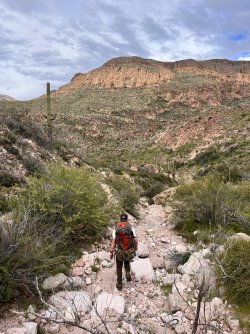
Reading anecdotes of people's experiences in the Superstitions (a place thick with legends and lore, the most famous of which tells of a lost gold mine attributed to a German immigrant in the 1870s. Dozens of people have died looking for it), you'll find that everyone who does make it out here has nothing but praise for the experience, many marking it as one of their favorite hikes in the state. Now having done it, I heartily agree. I would rate the hike in as mostly moderate witth very occasional, short stretches of "difficult", with the first quarter mile or so being rated as such, perhaps part of the reason that not many tackle it, and that we saw very few people in our three days out (three total, I believe), despite the close proximity to Phoenix and the range being full of many popular day hiking trails. If you or someone in the group is aware of the water situation and everyone is moderately fit, I think it is a good, but challenging hike even for somebody new to backpacking.
All photos were taken on an iPhone 13 Mini.
DAY 1
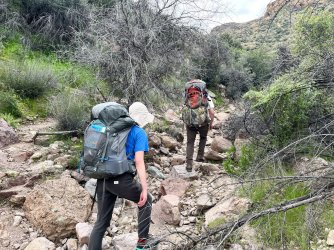
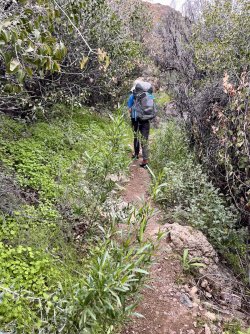
We started at the Peralta trailhead and took the Bluff Springs trail which we stayed on for about 4 miles. We were worried about weather in the days leading up to the trip and expected random showers during the day Friday and Saturday and thunderstorms both nights. In the end, the days were mostly clear and it only sprinkled briefly both nights after we were already in camp. Some ominous clouds hung around in the afternoons but nothing broke.
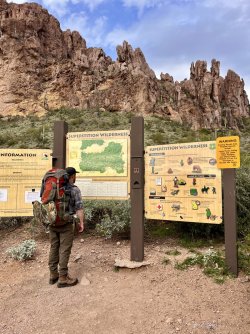
Checking the map at Peralta Trailhead.
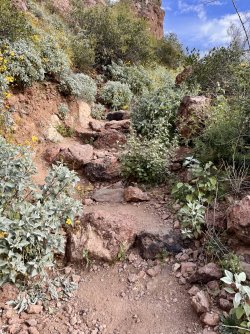
The very beginning of the trail.
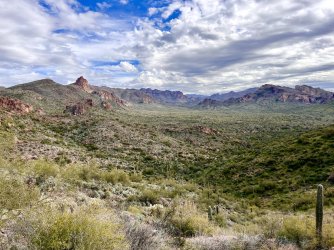
This is the first view that greets you after the first 15-20 minutes of hiking.
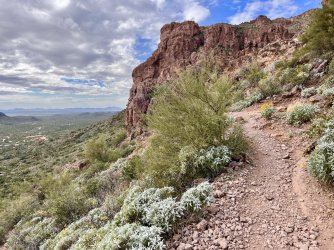
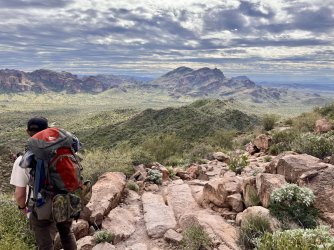
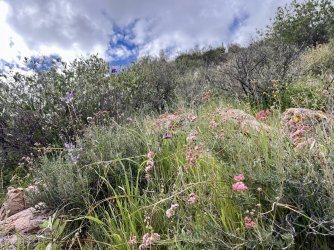
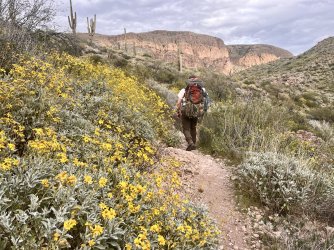
Not quite spring colors, but there were plenty of flowers dotting the landscape.
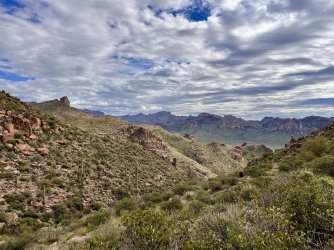
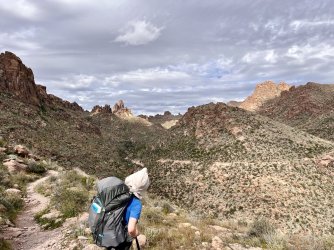
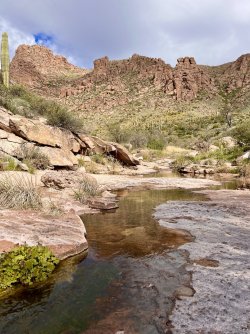
The first pool of water we found. Water sources are the trickiest part of backpacking out here, as they are scarce and only two of them in the whole range are consistently reliable, but due to some recent rains there was no scarcity during our time on the trail.
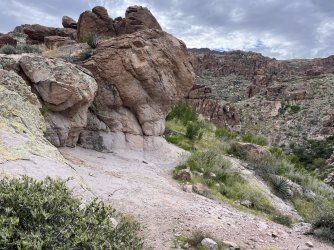
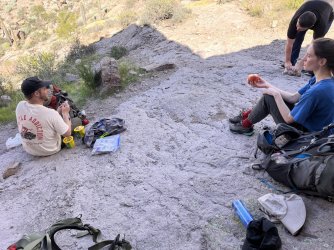
After a few hours of hiking, we chose to have lunch here under this large outcropping. I regret not snapping a photo of our view as we ate.
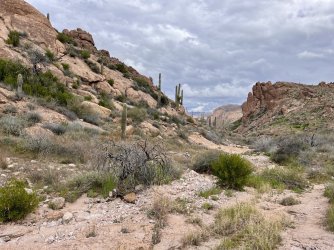
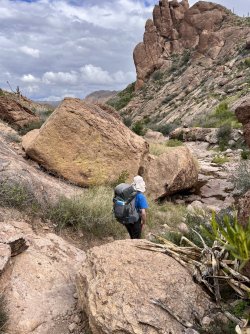
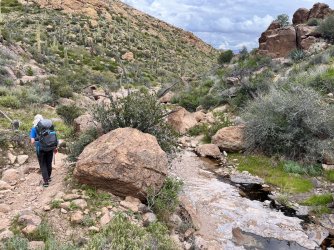
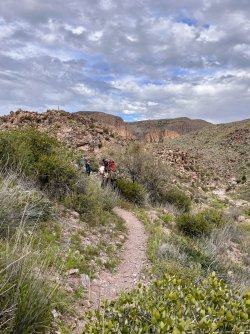
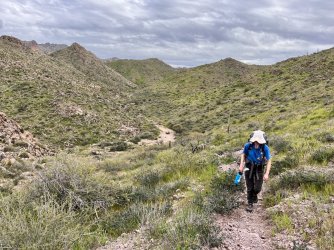
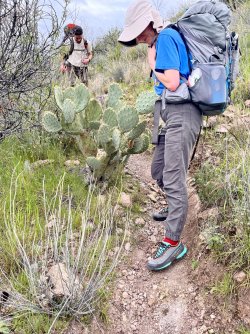
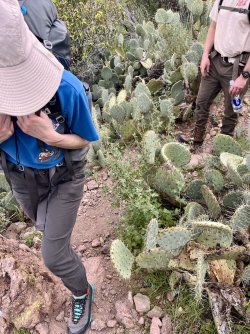
Of course, there is plenty of cactus to contend with out here! Lots of shimmying occurded to avoid impalement.
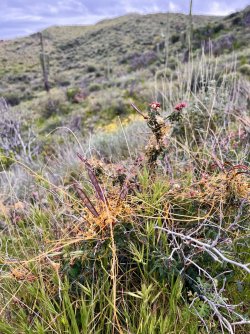
We saw a lot of this yellow, silly-string like plant, which none of us were familiar with. Does anybody know what it is?
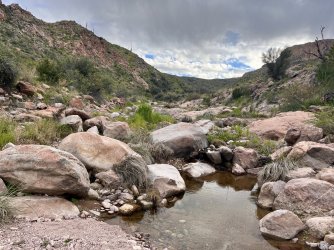
More water, but we waited until hitting LaBarge Spring to fill up.
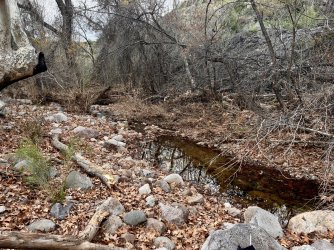
LaBarge Spring. The spot that my partner wanted to camp at was just a little further and was sure to have a flowing stream nearby, but LaBarge is known as the most consistent source of water in these mountains and is a popular spot to stop at, so we dropped by for some water and a break. The scenery and colors in this area were more akin to what we see in northern Arizona.
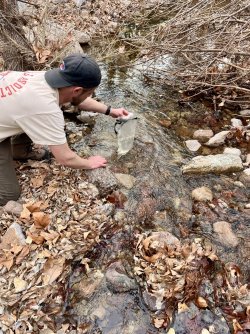
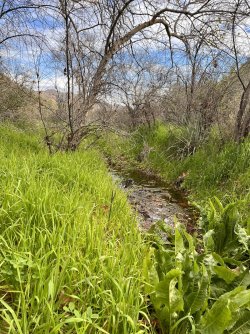
After fueling up, we headed hiked about 20 more minutes downtrail to our desired campsite.
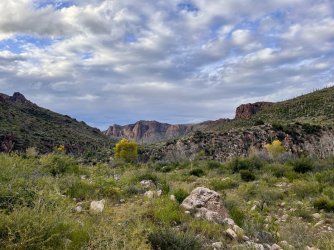
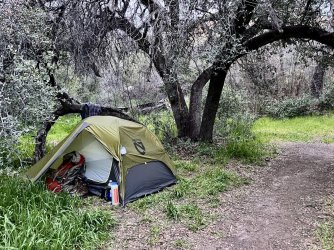
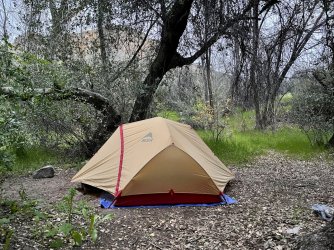
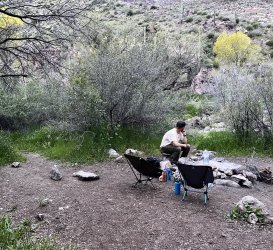
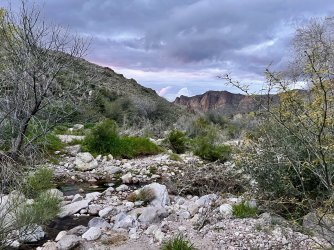
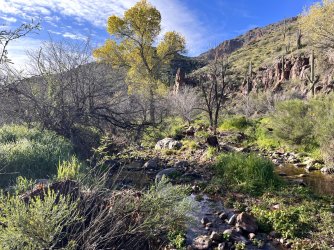
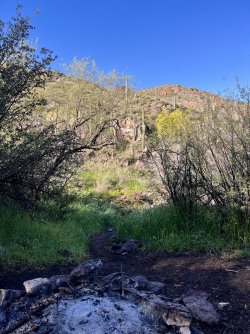
The spot was perfect, with plenty of areas for tents and lots of trees for shade. We had three tents among us and out here it is dificult to just set up on or off trail due to the terrain, especially if you need to fit more than one tent. It is better to seek out one of the few more open, flat areas to plop your tents, luckily this one was not taken (though nor were any of the others we wandered by). A large firepit sat about 40 feet from a flowing, rocky stream. We settled in for the evening, made dinner, drank tea and enjoyed a fire before turning in for the night with a light rain hitting our tents overhead.
DAY 2
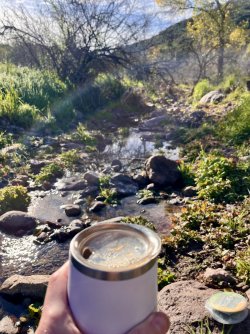
On our second day we decided to do a day hike to Charlebois Spring (another reliable water source) and the surrounding area. But first, coffee on the stream:
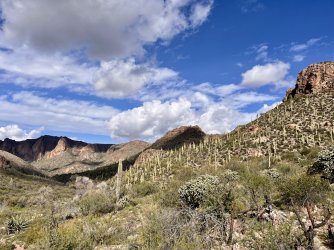
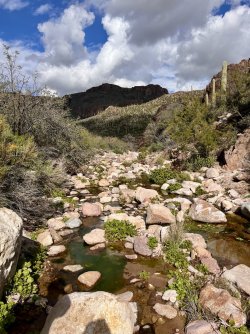
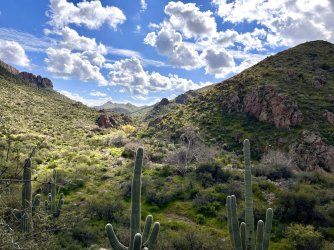
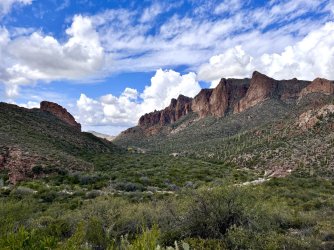
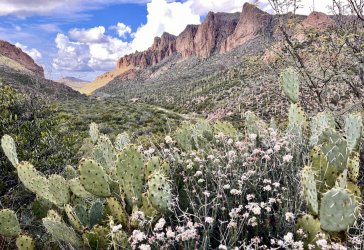
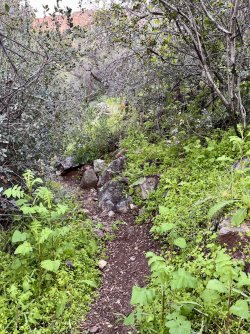
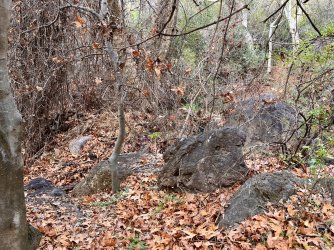
The area around Charlebois resembled what we saw at LaBarge, a lovely contrast of scenery. The way to the source is quite thick and requires some scrambling.
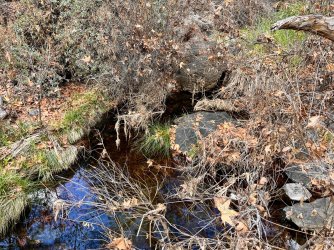
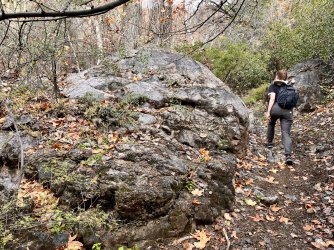
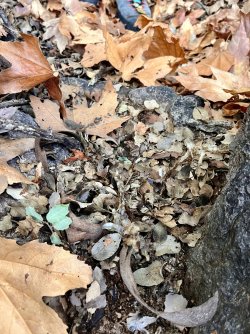
We did not see much in the way of wildlife due to it being January and some rains coming through overnight, but here is some snake skin for you if you can find it. Of course, the usual suspects do live out here: An assortment of snakes, bighorn sheep, a few kinds of deer, mountain lions, javelina and black bears. The bears are a very rare sight, and mostly roam eastern part of the mountains where hiking is known to be extremely overgrown, difficult and less attractive than the western parts. Mountain lions, of course, may as well be non-existent, despite their presence. None of us have ever seen one on any of our trips in the state (for better or worse).
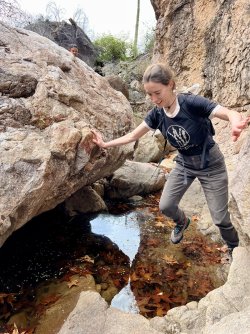
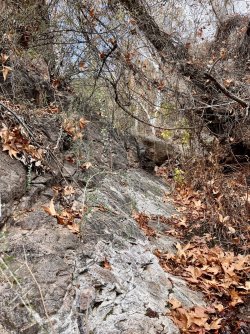
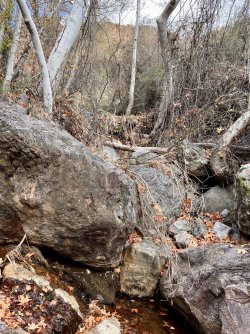
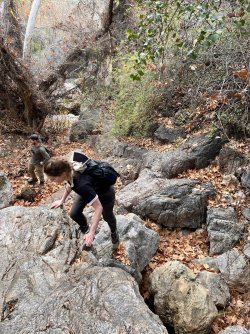
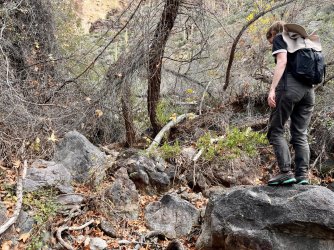
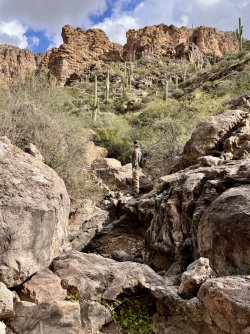
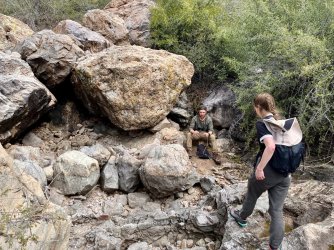
Where we sat down for lunch and a long break at Charlebois. After this, we decided to wander Red Tanks trail for awhile, which are the photos that follow.
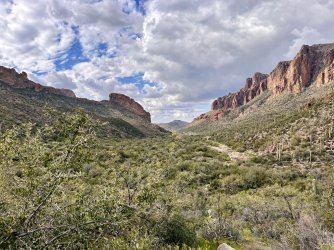
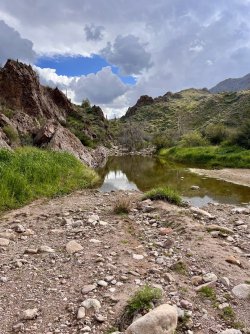
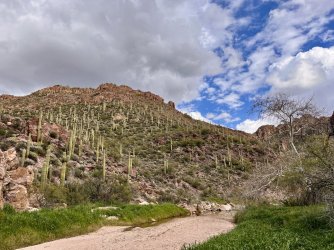
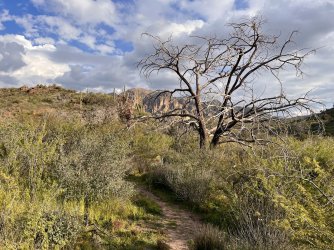
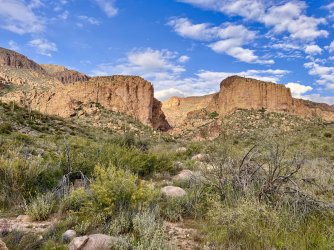
After some wandering we spotted this little canon in the distance off-trail and decided to go for it.
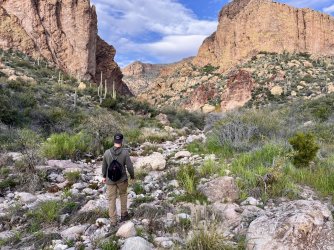
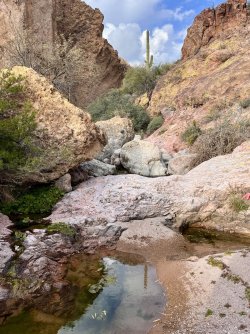
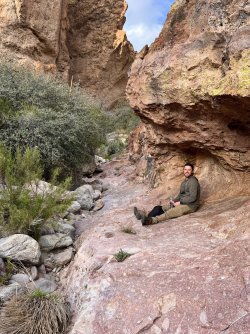
My friend Shane under a cool overhang where we took a dried fruit break before heading deeper.
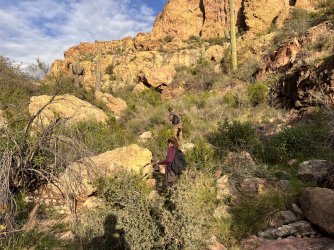
It certainly got a little thick! We saw a cave in the distance and wanted to see if we could make it before the sun set.
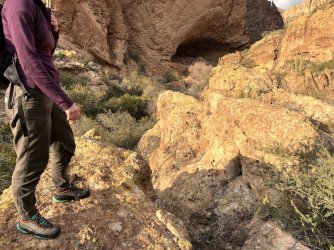
Unfortunately, at this point, we realized we wouldn't make it back before dark if we kept going, some clouds were rolling in, and the going looked to get quite tough. Another time.
DAY 3
Day 3 consisted of a very lazy morning and the roughly 6 mile hike back to the parking lot, during which time I did not take any photos.
I hope you enjoyed and I would encourage anyone who has the chance to get out into the Superstitions. We hope to start tackling some of the volcanoes around Mexico City this year, so perhaps some trip reports of those will follow.
Here is a bit of a preface to this trip. As mentioned elsewhere on the forums, my partner and I relocated to Mexico City a year and a half ago as she is attending a graduate program here. Due to all of the reasons that come with such a move, we have been unable to accomplish anything in the way of outdoors activities just yet. The logistics and busy-ness of life in a new country, coupled with there being very little in the way of a backpacking culture here, have left us really yearning to get back out. We are from Arizona, where we were able to car camp several weekends a month and plan a backpacking trip every 1-2 months if we desired. Not to mention beautiful day hikes of varying lengths and difficulties at our doorstep. The outdoors are very accesible in Arizona, and always breathtaking.
With that, we knew we would be coming home briefly at the end of this month, and opted to plan a three day/two night trip to the Superstition Mountains. These mountains begin just 30 minutes east of Phoenix and stretch for many miles in every other direction, where the howling wilderness eventually continues under other names and ranges. Viewing them from the freeway that passes them, you are greeted with a flat mountain face and it is hard to imagine the vast, remote wilderness that is on the other side. Many who live in the Phoenix area have no idea, and even many hikers/campers/backpackers are ignorant to the Superstiion Wilderness, and I was one of them, in a way.
Many people who live in the Phoenix area know that there is good backpacking in the Supes. However, we often choose to head north towards Sedona, Flagstaff, the Grand Canyon and the Mogollon Rim or south towards Tuscon, Mt. Lemmon, Saguaro National Park, The Chiricahuas, Cochise Stronghold, the Huachucas etc. My partner's father has been backpacking his entire life, one of his favorite spots being the Mazatzal Mountains (the range just north of the Supersition Mountains), but did not experience the Superstitions until she brought him there about five years ago. One of my best friends, who lives a little further north in Prescott, has spent 15+ years exploring the Rim, the Grand Canyon and surrounding areas, but never dove into the Supes. You get the point.
My patner wanted to take us out there, and January is the absolute best time to do this trip. So her, myself and two friends of 25 years (we are all coming up on 40 now) made it happen (one of them being the friend from Prescott mentioned above).
Reading anecdotes of people's experiences in the Superstitions (a place thick with legends and lore, the most famous of which tells of a lost gold mine attributed to a German immigrant in the 1870s. Dozens of people have died looking for it), you'll find that everyone who does make it out here has nothing but praise for the experience, many marking it as one of their favorite hikes in the state. Now having done it, I heartily agree. I would rate the hike in as mostly moderate witth very occasional, short stretches of "difficult", with the first quarter mile or so being rated as such, perhaps part of the reason that not many tackle it, and that we saw very few people in our three days out (three total, I believe), despite the close proximity to Phoenix and the range being full of many popular day hiking trails. If you or someone in the group is aware of the water situation and everyone is moderately fit, I think it is a good, but challenging hike even for somebody new to backpacking.
All photos were taken on an iPhone 13 Mini.
DAY 1
We started at the Peralta trailhead and took the Bluff Springs trail which we stayed on for about 4 miles. We were worried about weather in the days leading up to the trip and expected random showers during the day Friday and Saturday and thunderstorms both nights. In the end, the days were mostly clear and it only sprinkled briefly both nights after we were already in camp. Some ominous clouds hung around in the afternoons but nothing broke.
Checking the map at Peralta Trailhead.
The very beginning of the trail.
This is the first view that greets you after the first 15-20 minutes of hiking.
Not quite spring colors, but there were plenty of flowers dotting the landscape.
The first pool of water we found. Water sources are the trickiest part of backpacking out here, as they are scarce and only two of them in the whole range are consistently reliable, but due to some recent rains there was no scarcity during our time on the trail.
After a few hours of hiking, we chose to have lunch here under this large outcropping. I regret not snapping a photo of our view as we ate.
Of course, there is plenty of cactus to contend with out here! Lots of shimmying occurded to avoid impalement.
We saw a lot of this yellow, silly-string like plant, which none of us were familiar with. Does anybody know what it is?
More water, but we waited until hitting LaBarge Spring to fill up.
LaBarge Spring. The spot that my partner wanted to camp at was just a little further and was sure to have a flowing stream nearby, but LaBarge is known as the most consistent source of water in these mountains and is a popular spot to stop at, so we dropped by for some water and a break. The scenery and colors in this area were more akin to what we see in northern Arizona.
After fueling up, we headed hiked about 20 more minutes downtrail to our desired campsite.
The spot was perfect, with plenty of areas for tents and lots of trees for shade. We had three tents among us and out here it is dificult to just set up on or off trail due to the terrain, especially if you need to fit more than one tent. It is better to seek out one of the few more open, flat areas to plop your tents, luckily this one was not taken (though nor were any of the others we wandered by). A large firepit sat about 40 feet from a flowing, rocky stream. We settled in for the evening, made dinner, drank tea and enjoyed a fire before turning in for the night with a light rain hitting our tents overhead.
DAY 2
On our second day we decided to do a day hike to Charlebois Spring (another reliable water source) and the surrounding area. But first, coffee on the stream:
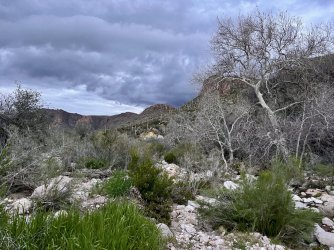
The area around Charlebois resembled what we saw at LaBarge, a lovely contrast of scenery. The way to the source is quite thick and requires some scrambling.
We did not see much in the way of wildlife due to it being January and some rains coming through overnight, but here is some snake skin for you if you can find it. Of course, the usual suspects do live out here: An assortment of snakes, bighorn sheep, a few kinds of deer, mountain lions, javelina and black bears. The bears are a very rare sight, and mostly roam eastern part of the mountains where hiking is known to be extremely overgrown, difficult and less attractive than the western parts. Mountain lions, of course, may as well be non-existent, despite their presence. None of us have ever seen one on any of our trips in the state (for better or worse).
Where we sat down for lunch and a long break at Charlebois. After this, we decided to wander Red Tanks trail for awhile, which are the photos that follow.
After some wandering we spotted this little canon in the distance off-trail and decided to go for it.
My friend Shane under a cool overhang where we took a dried fruit break before heading deeper.
It certainly got a little thick! We saw a cave in the distance and wanted to see if we could make it before the sun set.
Unfortunately, at this point, we realized we wouldn't make it back before dark if we kept going, some clouds were rolling in, and the going looked to get quite tough. Another time.
DAY 3
Day 3 consisted of a very lazy morning and the roughly 6 mile hike back to the parking lot, during which time I did not take any photos.
I hope you enjoyed and I would encourage anyone who has the chance to get out into the Superstitions. We hope to start tackling some of the volcanoes around Mexico City this year, so perhaps some trip reports of those will follow.
Last edited: