@Yvonne described it as a wild ride, I would agree. The earthquake was scary, but the aftershocks were almost as bad. It would start and then stop, start and stop. There were a couple of 5.0 aftershocks not long after, with smaller ones all day.
Yeah, shake, rattle, and roll!! We had a wild ride for months. It started end of April 2018 and lasted until the end of August. In that timeframe, we had 60,000 earthquakes, with at least one magnitude of 5.4 daily.
The fun thing is, you get totally used to it. The days leading to the magnitude 6.9 quake were horrible, with a magnitude three quake and higher every 2-3 minutes, day and night. And it kept going after the 6.9 quakes when we simultaneously had tectonic aftershocks and volcanic earthquakes.
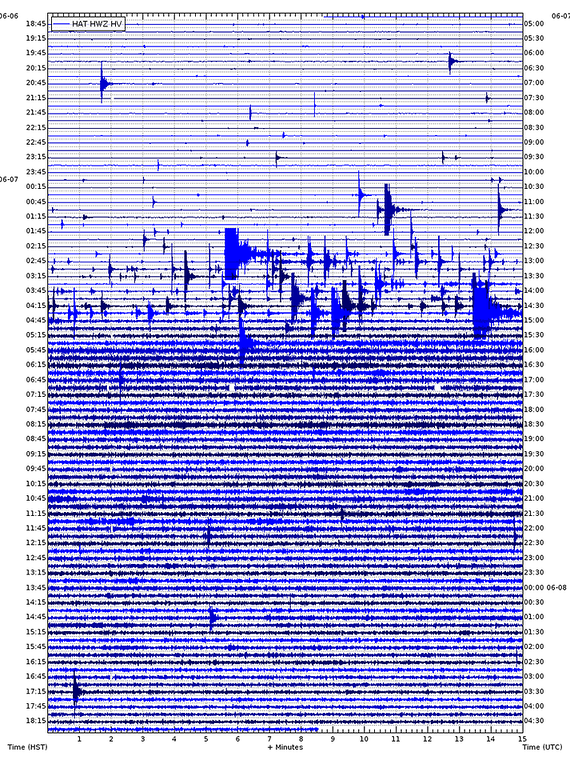
In the past few weeks, we had lots of earthquakes again. Often clusters of earthquake swarms with heightened seismicity, but they are not too bad. We are used to it here. Today we had 140 earthquakes, but most were the small kine ones below magnitude three. It will be interesting to see what will happen soon.
Our volcano is in unrest and could have an eruption soon. Then the earthquake rate will go down again.
We also often have more significant earthquakes caused by the bending of the oceanic crust because all our volcanoes, like Mauna Kea and Mauna Loa, are so heavy and massive that they bend the oceanic crust. This causes a lot of stress which is released in pretty regular earthquakes. Some can be pretty big.
The good thing is basically all homes are on volcanic rock. No worries about soil liquefaction, but the tough basalt lava shakes your place pretty well.
The old Hawaiian homes on Post and Pier style were awesome. They sway with the seismic waves like a boat in a storm but literally never experience any large damage. Itʻs amazing how much the wood can bend. My old house was Post and Pier, and when the P-wave arrived seconds before the S-wave, the whole house started to squeak. And then, about 1-2 seconds later, the shaking started.
Oh, and then our water catchment tanks!! Here in the rainforest, we do not have county water. Instead, we all collect rainwater in huge 10,000 Gallon water catchment tanks. And the water is always violently sloshing back and forth when we have bigger earthquakes like a magnitude five and up. The sloshing usually lasts about half an hour before everything settles down again.
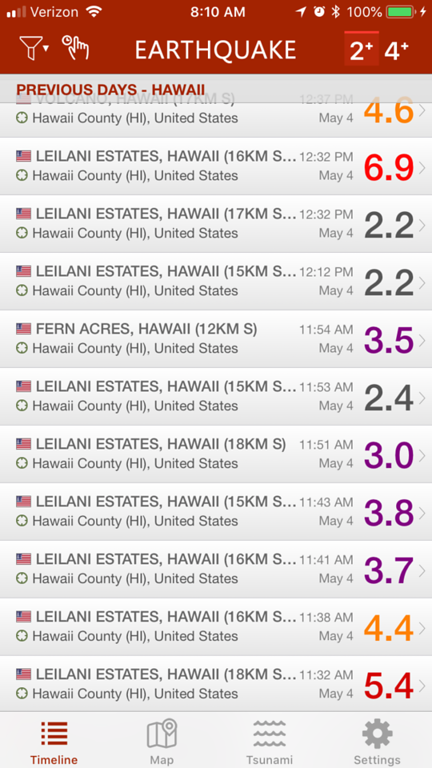
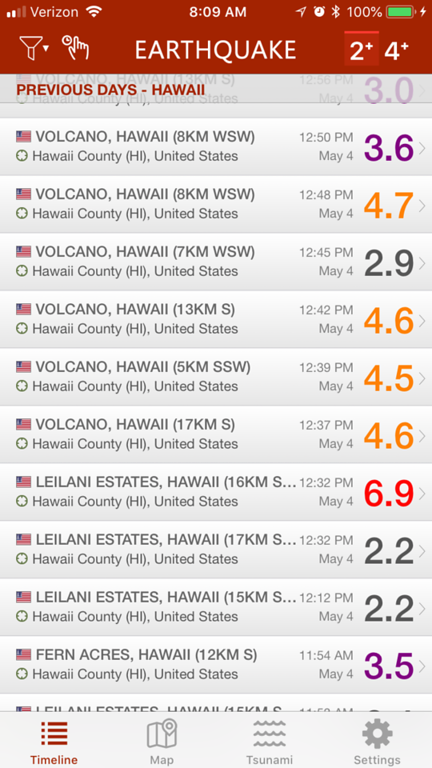
Here is a screenshot of the crazy wild ride we had in 2018. Look at the time stamp; it was basically every 3-8 minutes.
before the big 6.9 quake and after the magnitude 6.9 quake
At least I can say Iʻm totally seasoned regarding earthquakes and how to deal with them.
The next big one will come sooner or later, but we all know what to do here, and the houses here are made to withstand big quakes.
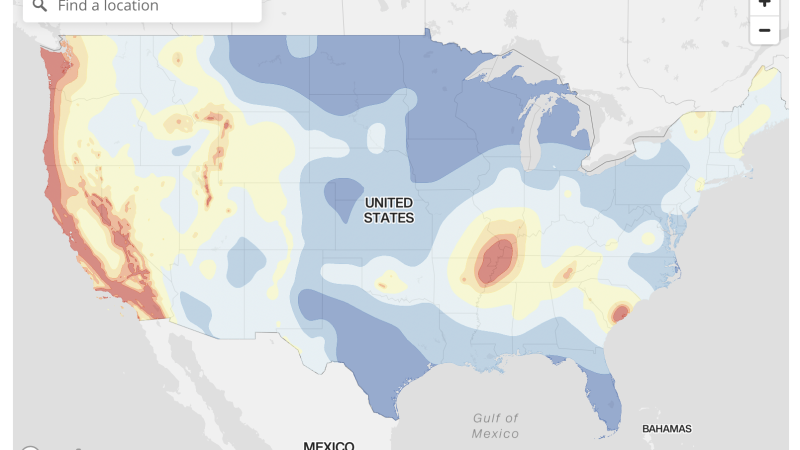
On the Mainland, many older homes are not really built to earthquake standards or are built right on the fault line, as was the case in Hurricane, UT. where I used to live.
Well, you can retrofit homes, but Iʻm not sure how many people are actually doing it if they live in a higher-risk area.
Okay, while Iʻm writing this, we had a little shaker of magnitude 2.9.



 www.cnn.com